
What to Expect on AC Replacement Day: A Roseville Homeowner’s Guide
- August 13, 2026
- 5 minutes
Deciding to replace your air conditioner is the hard part. Once that is settled, most homeowners have a much smaller and more practical question: what actually happens on the day the crew shows up? It is a fair thing to want to know. A crew will be in and out of your house for the better part of a day; there will be equipment on your driveway, and your cooling will be off for several hours. Below is an honest walkthrough of AC replacement in Roseville from arrival to walkthrough, so nothing about the day catches you off guard.
How long AC replacement takes
For a straightforward changeout, new condenser outside, new coil and air handler or furnace-mounted coil inside, same location, existing ductwork in good shape, plan on six to eight hours. Most crews arrive in the morning and are finished in the late afternoon. Some jobs run longer, and it is usually for one of these reasons: The indoor unit is in a tight attic or a cramped closet that has to be partially disassembled Electrical work is needed to bring the circuit or disconnect up to current code The line set has to be replaced rather than reused Duct repairs or return-air changes are being done at the same time We are switching system types, such as moving to a heat pump replacement instead of a standard AC If your job is one of the longer ones, you will know that before the day starts, not at four in the afternoon.
How to prepare your home for AC replacement:
Nothing here is complicated, and doing it the night before makes the whole day smoother.
- Clear a path from the front door to the indoor unit, and clear about three feet of space around the outdoor unit
- Move fragile items off shelves and walls along the route, since equipment carried through a hallway can knock things loose
- Plan for pets — doors will be propped open for hours, so a closed room or a day away from home is safest Park elsewhere if you can, so the truck can back into the driveway
- Expect no cooling for most of the day, and set your house cool in the early morning before we shut things down
- Decide where the thermostat should live if you have been thinking about relocating it
The AC replacement process, step by step
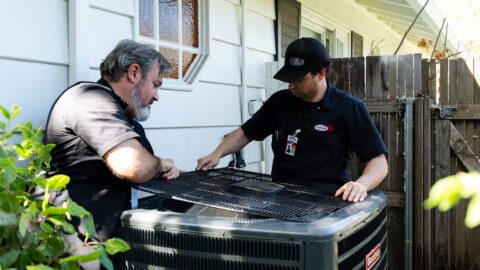
Protecting the house first. Before any tools come out, drop cloths and floor protection go down along the work path and around the equipment. Recovering refrigerant and removing the old system. Refrigerant is legally required to be recovered into a tank rather than vented, and that happens before anything is disconnected. The old condenser, coil and any failed components then come out and go straight onto the truck.
Prepping the base and connections.
The outdoor pad gets leveled or replaced, the electrical disconnect is checked, and the line set is either flushed or replaced. This is the unglamorous part of the day and the part that determines whether the new system performs like it should. Setting the new equipment. The condenser is set and secured, the indoor coil or air handler is installed and sealed to the plenum, and the condensate drain and safety switch are connected. Brazing, pressure testing, and pulling a vacuum. Connections are brazed, then the system is pressure tested for leaks and evacuated with a vacuum pump to remove moisture and air. Skipping or rushing this step is one of the most common causes of an early compressor failure, which is exactly why we do not rush it.
Charging and starting up.
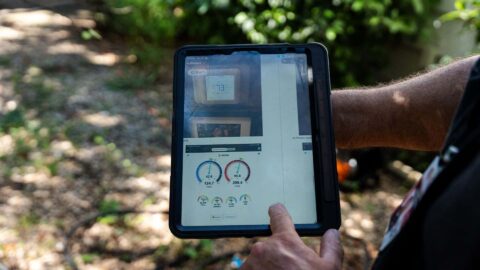
Refrigerant is weighed in to the manufacturer’s specification, the thermostat is wired and configured, and the system is started for the first time. Testing we run before the AC replacement is done A new system is not finished when it turns on. Before we pack up, we verify it is actually performing: Supply and return temperatures, to confirm the temperature split is where it should be Refrigerant pressures and superheat or subcooling against the manufacturer’s targets Voltage and amp draw on the compressor and blower Airflow and static pressure, which is where duct problems reveal themselves Condensate drainage and the float switch A full cooling cycle from thermostat call to shutdown If a number is off, we correct it that day.
Your walkthrough, warranty and AC replacement paperwork
Before the crew leaves, someone should walk you through your own system. That means showing you the new thermostat and how to program it, where the filter goes, what size it is and how often to change it, what the outdoor unit needs to stay clear of, and what sounds are normal in the first week. You should also leave the day with your model and serial numbers, your registered manufacturer warranty, your labor warranty terms, and the permit and inspection information for the work. Keep that paperwork somewhere you can find it in five years, because warranty claims always ask for it.
Rebates and utility incentives are worth asking about while the paperwork is fresh — the financing and rebates options on our site outline what is currently available, and current special offers sometimes apply to new installations.
The first week after an AC replacement A new system will feel different, and most of it is normal. You may notice a faint smell from new components the first few cycles, longer and gentler run times if you moved to a variable-speed or two-stage system, and different airflow at the registers.
What is not normal:
Water anywhere near the indoor unit, a breaker that trips, ice on the refrigerant lines, or a system that runs continuously without reaching your setpoint. Call us if you see any of those — it is far easier to adjust something in week one than to discover it next July.
Also change the filter on schedule from the start. A restricted filter on brand new equipment causes the same problems it caused on your old system, and enrolling in a maintenance plan keeps the warranty requirements and the seasonal checkups from falling off your calendar. Schedule your AC replacement in Roseville
We have been installing and servicing systems in Roseville since Ray O. Cook started this company out of his garage in 1947, and an install day is where that experience is most visible — in the prep work, the pressure test, and the numbers we check before we leave. If you are weighing whether it is time, our guide to AC repair versus replacement is a good place to start. When you are ready, call (916) 237-9037 or schedule an appointment online, and we will look at your home, size the system properly, and tell you exactly what your install day would look like.