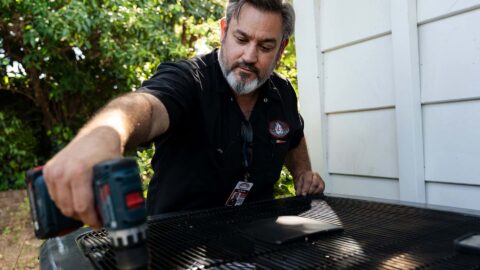
AC Tune‑Up in Sacramento

air conditioner maintenance sacramento

AC Tune‑Up in Sacramento

Air Conditioner Tune‑Up in Sacramento: How a Pro HVAC Check Saves You Money

When summer hits the Sacramento area, your air conditioner has to work hard to keep your home comfortable. A professional AC tune‑up from Ray O. Cook Heating & Air makes sure your system is ready before the first real heat wave, helping you avoid surprise breakdowns and high energy bills. As a locally owned company that has served homeowners since 1947, we treat every tune‑up like an investment in your comfort and peace of mind.

What Is an AC Tune‑Up?

A true AC tune‑up is a detailed, start‑to‑finish inspection and adjustment of your cooling system, not just a quick visual check and hose‑down. Our technicians verify that your equipment is clean, safe, properly charged, and operating within manufacturer guidelines. The goal is simple: restore performance, improve efficiency, and catch small issues before they turn into big, expensive problems.

Key Steps in a Professional AC Tune‑Up

You don’t need to be an HVAC expert to understand what we do during a visit. Here are some of the key steps our technicians perform during a typical tune‑up:

Inspecting and Replacing Air Filters

We inspect your air filter and recommend replacement if it’s dirty or clogged. A clean filter supports healthy airflow, helps protect your equipment from dust and debris, and can improve indoor air quality.

Cleaning the Outdoor Condenser Unit

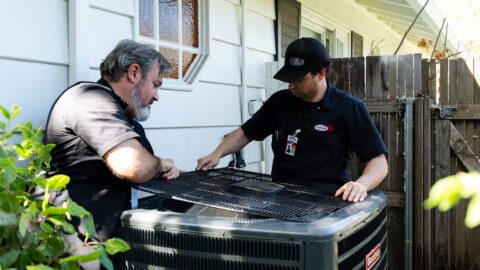
We clear debris around the outdoor unit, visually inspect the condenser, and clean the coil surface as needed. When the coil is clean and air can move freely, your system doesn’t have to work as hard to move heat out of your home.

Checking Refrigerant Levels and System Pressures

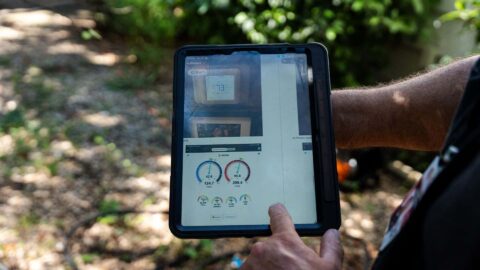
Our technicians use gauges and temperature readings to check refrigerant levels and operating pressures. If readings are outside the normal range, it can indicate a leak, restriction, or other performance issue that needs attention.

Tightening Electrical Connections and Lubricating Moving Parts

Loose electrical connections, worn components, and dry moving parts can cause nuisance shut‑offs or premature failures. We inspect and tighten connections where appropriate and lubricate manufacturer‑approved points to support smooth operation.

Verifying Thermostat Operation and Airflow

We confirm that your thermostat is responding correctly, that your system is cycling on and off properly, and that supply and return airflows feel consistent at the registers. If something seems off, we’ll investigate further and explain what we find.

How Often Should Sacramento Homeowners Schedule Tune‑Ups?

Most manufacturers recommend a professional tune‑up once a year for central air systems. For Sacramento‑area homes that see heavy summer use, we generally suggest scheduling service in the spring, before temperatures spike. Yearly maintenance helps keep your warranty in good standing, reduces the likelihood of surprise breakdowns, and can extend the life of your system.

Benefits: Lower Bills, Fewer Breakdowns, Better Comfort

A well‑maintained AC system doesn’t just run; it runs better. Homeowners often notice shorter run times, more even temperatures from room to room, and fewer hot‑and‑cold spots after a thorough tune‑up. Over the long term, regular maintenance can reduce repair frequency, delay the need for replacement, and help keep energy costs under control.

Why Homeowners Trust Ray O. Cook Since 1947

Ray O. Cook Heating & Air has been serving local families for decades because we focus on honest workmanship, clear communication, and reliable results. We’re locally owned and operated—not part of a large corporate roll‑up—so you get a team that knows the area, understands how our climate affects your equipment, and stands behind the work. Our technicians take the time to explain what they find, answer your questions, and give you straightforward options.

Schedule Your AC Tune‑Up in Sacramento, Rancho Cordova, or Roseville

If your air conditioner hasn’t had a professional tune‑up in the last year, now is the perfect time to schedule. We serve homeowners throughout Sacramento, Rancho Cordova, Roseville, and the surrounding communities with convenient appointment windows and friendly, experienced technicians. Call us today or request service online to get your AC ready for the season.

Common AC Repair Problems in Roseville CA Homes

ac tune up sacramento

Common AC Repair Problems in Roseville CA Homes

Common AC Repair Problems in Roseville, CA Homes

When your AC stops performing in Roseville, it rarely happens without warning. Most air conditioning failures follow a pattern, a gradual decline that shows up as a warm room, a strange noise, or a utility bill that’s suddenly much higher than last month. Knowing what to look for helps you catch problems early, which is almost always cheaper than waiting until something fails.

Here are the seven most common AC repair problems seen in Sacramento Valley homes, what causes them, and how to know when a repair is enough, or when it’s time to think about hvac replacement.

1. Capacitor Failure

What it is: Capacitors are cylindrical electrical components that provide the power boost to start the compressor and fan motors. They’re the most commonly replaced parts in residential AC systems across the Sacramento Valley.

What causes it: Capacitors wear out with age and heat stress. Roseville’s extended summers — where an AC system might run 10–12 hours a day for months — accelerate this wear significantly.

How to recognize it: Your AC unit may hum but fail to start, or the outdoor fan spins slowly before stopping. The system might turn on briefly, then shut off.

Repair or replace? Capacitor replacement is one of the most affordable AC repairs, typically $150–$300. If your system is otherwise in good shape, this is a straightforward repair worth doing.

2. Refrigerant Leaks

What it is: Refrigerant is the substance that absorbs heat from your home’s air and transfers it outside. A leak means your system can’t do its job and it also means refrigerant is being released into the atmosphere.

What causes it: Vibration over time can cause small cracks or pinhole leaks in refrigerant lines or the evaporator coil. Poor installation or physical damage to the outdoor unit can also cause leaks.

How to recognize it: Your home takes longer to cool, or never quite reaches the set temperature even on moderate days. Ice buildup on the refrigerant lines or evaporator coil is another indicator.

Repair or replace? A small leak in accessible lines can be repaired and the system recharged. If the leak is in the evaporator coil itself, repair costs can approach or exceed the cost of a new system — especially for older units still using R-22 refrigerant, which is now extremely expensive and difficult to source.

3. Frozen Evaporator Coil

What it is: The evaporator coil, located in the indoor air handler, freezes when airflow is restricted or refrigerant is low paradoxically causing the AC to blow warm air despite running constantly.

What causes it: A clogged air filter is the most common culprit. Blocked return air vents, a failing blower motor, or low refrigerant charge can all cause the same problem.

How to recognize it: Warm air from supply registers, visible ice on the refrigerant line near the indoor unit, or water dripping from the air handler.

Repair or replace? First, turn the system to fan-only mode to allow the coil to thaw — never try to chip away ice. Then check and replace the air filter. If the problem recurs, call for service to determine whether it’s a refrigerant or airflow issue.

4. Dirty Condenser Coils

What it is: The condenser coil in your outdoor unit releases heat from the refrigerant to the outside air. When it’s coated in dirt, leaves, or cottonwood debris — common in Roseville yards — heat transfer is severely impaired.

What causes it: Normal outdoor exposure, combined with the fine dust and particulates common in Sacramento Valley air during dry months.

How to recognize it: The system runs longer without cooling effectively, or the compressor overheats and trips its internal safety switch, causing the system to shut down unexpectedly.

Repair or replace? This is a maintenance issue, not a repair; professional coil cleaning resolves it. Left unaddressed, however, compressor overheating can eventually cause permanent compressor failure, which is typically a replacement situation.

5. Blower Motor Problems

What it is: The blower motor drives the fan that circulates conditioned air through your ductwork. When it fails or weakens, airflow drops and your system loses most of its effectiveness.

What causes it: Motor wear over time, capacitor failure (see above), or debris entering the motor housing. In older Roseville homes, original motors that have never been replaced are particularly vulnerable.

How to recognize it: Weak airflow from supply vents, a grinding or squealing noise from the air handler, or the system running without moving much air.

Repair or replace? Blower motor replacement costs $300–$600 and is worth doing on a system less than 10 years old. On an older system with multiple other worn components, weigh the repair cost against replacement value.

6. Thermostat Malfunctions

What it is: A faulty thermostat can cause the system to short-cycle, fail to turn on, or run continuously without reaching the set temperature — mimicking symptoms that look like bigger problems.

What causes it: Dead batteries, wiring issues, dust accumulation on sensor components, or failure of the thermostat itself.

How to recognize it: Temperature readings that seem inaccurate, the system not responding to setpoint changes, or erratic cycling behavior.

Repair or replace? A thermostat replacement is typically $150–$350 installed, one of the lower-cost AC repairs. Upgrading to a programmable or smart thermostat can also pay back in energy savings on SMUD or PG&E billing.

7. Drainage and Pan Issues

What it is: Your AC removes significant humidity from indoor air, and all that moisture has to drain somewhere. A clogged condensate drain or a cracked drain pan causes water to back up and can trigger a float switch that shuts the system down.

What causes it: Algae growth in the drain line (extremely common in Sacramento Valley’s warm climate), debris blockages, or a pan that has developed cracks with age.

How to recognize it: Water pooling near the air handler, musty smells from supply vents, or a system that shuts off unexpectedly and won’t restart.

Repair or replace? Drain cleaning is inexpensive preventive maintenance. Pan replacement is a moderate repair. Neither should drive a replacement decision on its own.

When HVAC Repair Isn’t Enough

If you’re facing a compressor failure on a system over 12 years old, a refrigerant leak in the evaporator coil combined with high repair costs, or you’re looking at multiple failing components simultaneously, replacement often makes more financial sense than repair. A rule of thumb: if the repair cost exceeds 50% of the cost of a new system, and the system is more than 10 years old, replacement is worth serious consideration.

Get an Honest Assessment from Ray O. Cook

Ray O. Cook Heating & Air has been diagnosing and repairing AC systems in Roseville since 1947. We give you a straight assessment. What’s wrong, what it costs to fix, and whether it’s worth fixing. No unnecessary upsells.

Call (916) 908-3289 or contact us online to schedule AC repair service in Roseville and the surrounding Sacramento area.

Tips to Lower Your Air Conditioning Bills During the Summer

air conditioner install sacramento

Tips to Lower Your Air Conditioning Bills During the Summer

How Air Conditioning Systems Work

Air conditioning systems are marvels of modern engineering, designed to provide comfort by regulating indoor temperatures. At the heart of these systems lies the refrigeration cycle, a process that involves the continuous circulation of a refrigerant through various components such as compressors, evaporators, and condensers. Understanding these basic mechanics can help you appreciate the complexity and efficiency of your air conditioning system, as well as the importance of regular maintenance to keep it running smoothly.

Knowing the specifics of your air conditioning model is equally important for optimizing its efficiency—especially during the summer, when AC use is bound to rise. Familiarizing yourself with your unit’s specifications allows you to tailor its usage to your home’s unique needs, ensuring that you’re not overworking the system or wasting energy.

Identifying Inefficiencies in Your Air Conditioning System

Common inefficiencies often stem from simple issues such as dirty filters, which can obstruct airflow and force the system to work harder than necessary. Leaks in ductwork or refrigerant lines are another common culprit, leading to loss of cooled air and increased energy consumption. Outdated thermostats can also contribute to inefficiencies, causing the system to cycle on and off more frequently than needed.

By identifying and addressing these inefficiencies early, you can reduce energy consumption, lower your bills, and extend the life of your air conditioning system.

Setting the Right Temperature In Your Home

During the hotter months, it’s recommended to set your thermostat to around 78 degrees Fahrenheit when you’re home and awake. This temperature strikes a balance between comfort and energy efficiency. When you’re away from home or asleep, consider setting the thermostat a few degrees higher to maximize savings. According to energy experts, each degree you raise the thermostat can save you up to 3% on cooling costs.

Utilizing Programmable and Smart Thermostats

Programmable and smart thermostats allow you to set cooling schedules that align with your daily routine, ensuring your home is only cooled when necessary. Smart thermostats take this a step further by learning your habits over time and making automatic adjustments to optimize efficiency. Many smart thermostats also offer mobile apps, allowing you to adjust settings remotely and receive energy usage reports.

Improving Home Insulation

Insulation acts as a barrier, preventing the transfer of heat between the inside and outside of your home. Key areas to focus on include walls, attics, and windows, as these are common sources of heat gain. Upgrading your home’s insulation can lead to significant energy savings and a more comfortable living space.

Using Fans and Ventilation Wisely

Ceiling fans create a wind-chill effect that can make a room feel cooler, allowing you to raise the thermostat setting without sacrificing comfort. Taking advantage of natural ventilation by opening windows during cooler parts of the day can help circulate fresh air and reduce the need for air conditioning.

Routine Maintenance Tasks

Regular maintenance is essential for keeping your air conditioning system running efficiently. Simple tasks such as cleaning or replacing air filters every one to three months can significantly improve airflow and system performance. Checking refrigerant levels is another important maintenance task, as low levels can indicate leaks or other issues.

Considering System Upgrades

Older systems often lack the energy-saving features found in newer models. Upgrading to a more energy-efficient model can result in significant long-term savings on your utility bills. Modern systems often come with advanced features such as variable-speed compressors and smart thermostats.

Reducing Heat Gain in Your Home

Simple measures such as using shades, blinds, or curtains can block out direct sunlight and keep indoor temperatures cooler. Reflective films applied to windows can also reduce heat gain. Landscaping can play a role as well, with strategically placed trees and shrubs providing natural shade and cooling.

Adopting Energy-Saving Habits

Simple actions such as turning off unused electronics and lights can prevent unnecessary heat generation. Closing doors to unused rooms helps contain cooled air in occupied spaces. Using appliances such as ovens and dryers during cooler parts of the day can prevent excess heat buildup in your home.

Keep AC Costs Low with Ray O. Cook Heating & Air

If you’re looking to optimize your air conditioning system and improve your home’s energy efficiency this summer, Ray O. Cook Heating & Air is here to help. Our team of experienced AC professionals can provide expert advice, routine maintenance, and system upgrades tailored to your specific needs.

Ray O. Cook Heating & Air is available by phone at (916) 908-3289 or you can always send us a message online.


What’s Included in an AC Tune-Up in Roseville, CA?

air conditioner tune up sacramento

What’s Included in an AC Tune-Up in Roseville, CA?

What’s Included in an AC Tune-Up in Roseville, CA?

If you’ve ever wondered whether an AC tune-up is actually worth the cost, you’re not alone. Many Roseville homeowners assume their system is fine as long as it’s still blowing cold air. But by the time your AC shows obvious signs of trouble, inconsistent cooling, strange noises, and skyrocketing energy bills, the problem has usually been building for months. A professional AC tune-up in Roseville, CA, catches those problems before they become expensive repairs, and scheduling it in spring puts you ahead of the curve before triple-digit temperatures arrive.

Here’s exactly what a qualified HVAC technician does during a proper tune-up — and why skipping it in a Sacramento Valley summer is a risk not worth taking.

What a Professional AC Tune-Up Actually Covers
A tune-up is not just a filter swap and a glance at the thermostat. A thorough AC tune-up in Roseville, CA, involves a systematic inspection and service of every major component in your system.

Coil Cleaning

Your AC has two coils — the evaporator coil inside and the condenser coil in the outdoor unit. Both collect dirt over time. A dirty evaporator coil reduces the system’s ability to absorb heat from your home’s air. A fouled condenser coil can’t release that heat efficiently outside, causing the compressor to work harder and wear out faster. Technicians clean both coils using approved coil cleaner to restore heat transfer efficiency.

Refrigerant Level Check

Your AC doesn’t “use up” refrigerant — if the level is low, there’s a leak somewhere. During a tune-up, the technician measures system pressure to verify refrigerant charge is within manufacturer specifications. An undercharged system runs continuously without reaching your set temperature, wasting energy and stressing the compressor. If a leak is found, it’s repaired, and the refrigerant is recharged.

Electrical Inspection and Testing

Loose wiring, corroded contacts, and failing capacitors are among the most common causes of AC breakdowns in Roseville — and they’re largely invisible until they fail. A tune-up includes checking all electrical connections, testing capacitors with a multimeter, and inspecting the contactor that controls power to the compressor. Catching a $25 capacitor before it fails saves you an emergency service call in August.

Blower Motor and Airflow Check

Restricted airflow is one of the fastest ways to strain your AC system. The technician checks the blower motor, measures airflow, and inspects the condition of your air filter. They’ll also inspect the return air ducts for visible leaks or blockages that reduce system efficiency.

Condensate Drain Inspection

Your AC removes humidity from the air as it cools, and that moisture drains through a condensate line. A clogged drain can cause water damage to your ceiling or walls, or trigger a safety shutoff that stops your system from running entirely. Technicians flush the drain and verify proper flow.

Thermostat Calibration

A thermostat that reads two or three degrees off causes your system to run longer than necessary or short-cycle before your home reaches the set temperature. The technician verifies calibration and checks that the system responds correctly to temperature changes.

Overall System Performance Test

After servicing individual components, the technician runs the system through a full cooling cycle to measure temperature differential (the difference between return air and supply air temperatures). A properly functioning AC should produce a 15–20°F temperature drop across the evaporator coil. Anything outside that range indicates a problem worth investigating.

Why Spring Is the Right Time for an AC Tune-Up in Roseville

Roseville summers routinely push past 105°F, and the Central Valley heat season can extend from May through October. By June, HVAC companies across the Sacramento region are fully booked with emergency calls — getting a tune-up appointment can mean a week-long wait while your system struggles in the heat.

Scheduling your AC tune-up in Roseville in April and May means:

You get your preferred appointment time, not whatever’s left during peak demand

Any parts that need ordering can be sourced before summer stock runs low

If a more significant repair or replacement is needed, you have time to plan and budget without the pressure of a heat advisory

It also means your system enters the season at peak efficiency, which matters for your energy bill. A properly tuned AC can use 5–15% less electricity than a neglected one, according to the U.S. Department of Energy. For a Sacramento Valley home running its AC six or more months a year, that adds up quickly on your PG&E or SMUD bill.

Is an AC Tune-Up Worth the Cost?

A professional tune-up typically runs $75–$150 in the Roseville market. Consider what you’re protecting: the average central AC system costs $4,000–$8,000 to replace. A tune-up that extends your system’s life by even two or three years more than pays for itself. Add in energy savings and avoided emergency repair calls, and the math is straightforward.

The tune-up also gives you an honest picture of your system’s condition. If a technician finds that your 15-year-old system has a failing compressor, you’d rather know that in April than on a Saturday in July.

Schedule Your Spring AC Tune-Up with Ray O. Cook

Ray O. Cook Heating & Air has served Roseville and the greater Sacramento Valley since 1947. Our technicians perform thorough, honest AC tune-ups with no upsell pressure — just a complete inspection and a straight assessment of your system’s condition.

Call us at (916) 908-3289 or contact us online to schedule your spring AC tune-up in Roseville before the calendar fills up.